informed consent
Homeopathy is harmless – except when it kills you!
Death by homeopathy has been a theme that occurred with depressing regularity on my blog, e.g.:
- Death by homeopathy
- Another death by homeopathy
- Death by homeopathy?
- The case of a boy tortured to death with homeopathy
- Homeopathy is the death of the patient suffering from gangrene
Now, there is yet another sad fatality that must be added to the list. This case report presents a 61-year-old woman with metastatic breast cancer who opted for homeopathic treatments instead of standard oncological care. She presented to the Emergency Department with bilateral necrotic breasts, lymphedema, and widespread metastatic disease. Imaging revealed extensive lytic and sclerotic lesions, as well as pulmonary emboli. Laboratory results showed leukocytosis, lactic acidosis, and hypercalcemia of malignancy.
During hospitalization, patient was managed with anticoagulation and broad-spectrum antibiotics. Despite disease progression, patient declined systemic oncological treatments, leading to a complicated disease trajectory marked by frailty, sarcopenia, and functional quadriplegia, ultimately, a palliative care approach was initiated, and she was discharged to hospice and died.
This case highlights the complex challenges in managing advanced cancer when patients choose alternative therapies over evidence-based treatments. The role of homeopathy in cancer care is controversial, as it lacks robust clinical evidence for managing malignancies, especially metastatic disease.
Although respecting patient autonomy is essential, this case underscores the need for healthcare providers to ensure patients are fully informed about the limitations of alternative therapies. While homeopathy may offer emotional comfort, it is not a substitute for effective cancer treatments. Earlier intervention with conventional oncology might have altered the disease course and improved outcomes. The eventual transition to hospice care focused on maintaining the quality of life and dignity at the end-of-life, emphasizing the importance of integrating palliative care early in the management of advanced cancer to enhance patient and family satisfaction.
Even though such awful stories are far from rare, reports of this nature rarely get published. Clinicians are simply too busy to write up case histories that show merely what sadly must be expected, if a patient refuses effective therapy for a serious condition and prefers to use homeopathy as an “alternative”. Yet, the rather obvious truth is that homeopathy is no alternative. I have pointed it out many times before: if a treatment does not work, it is dangerously misleading to call it alternative medicine – one of the reasons why I nowadays prefer the term so-called alternative medicine (SCAM).
But what about homeopathy as an adjunctive cancer therapy?
In 2011, Walach et al published a prospective observational study with cancer patients in two differently treated cohorts: one cohort with patients under complementary homeopathic treatment (HG; n = 259), and one cohort with conventionally treated cancer patients (CG; n = 380). The authors observed an improvement of quality of life as well as a tendency of fatigue symptoms to decrease in cancer patients under complementary homeopathic treatment.
Walach and other equally deluded defenders of homeopathy (such as Wurster or Frass) tend to interpret these findings as being caused by homeopathy. Yet, this does not seem to be the case, as they regularly forget about the possibility of other, more plausible explanations for their results (e.g. placebo or selection bias). I am not aware of a rigorous trial showing that adjunctive homeopathy has specific effects when used by cancer patients (if a reader knows more, please let me know; I am always keen to learn).
So, is there a role for homeopathy in the fight against cancer?
My short answer:
No!
I has been reported that a man is pleading to steer clear of chiropractors. Last year, Tyler Stanton endured “the worst pain I had ever experienced in my life,” a hospital stay, and the beginning of an ongoing struggle that has left him unable to work. All started immediately after a chiropractor cracked his neck — and something popped.
After adjusting Stanton’s back, the chiropractor moved on to his neck. “It didn’t crack on the first time. On the second time where he tried to crack my neck, he put a lot of force behind it, and I heard one huge and painful pop. I knew immediately that something was wrong.” Stanton recalled that when he tried to sit up, the room began to spin. “My equilibrium was just completely f—ked. I was instantly, profusely sweating.”
After laying on the table for half an hour, Stanton made the short trip back to his home, where he became “violently ill.” Throwing up uncontrollably and unable to see straight, he got into bed, hoping rest would alleviate his symptoms. The following morning, Stanton woke up to “the worst pain I had ever experienced in my life. The entire right side of my body was numb. It was really scary.”
He was taken to the hospital, where he was diagnosed with a herniated disc between the C5 and C6 vertebrae in his neck. Due to the acute pain he was experiencing, he stayed in the hospital for several weeks. “They ended up giving me epidural injections into my spine, and they didn’t even make a dent into the pain,” he said. Ultimately, doctors gave him two choices: spinal fusion therapy or physical therapy to manage his discomfort.
Fearful of the consequences of surgery, Stanton opted for PT. “I had a pharmacy of pain medication to help the nerves be less inflamed so I can get mobility and feeling back into the right side of my body. Essentially, I just had to go home and lay down for about two more months.”
Unable to work, Stanton burned through his savings, and six months into his recovery, he is just beginning to regain sensation in his right arm. “I still deal with pain. I’m still limited in what I can do physically. It just destroyed me. Mentally, financially, physically, all of it.” With limited mobility and mounting medical bills, Stanton is consulting with lawyers and considering legal action. “I kinda feel like I just don’t have another choice because this really just derailed my entire life overnight,” he said.
While proponents say chiropractors help alleviate pain, many doctors describe the field as pseudoscience — and warn that it can actually lead to serious problems. ““There are reports of severe side effects with chiropractic treatment, including blood clot formation, herniated discs, fractures, artery dissection, stroke, paralysis, and death,” explained Gbolahan Okubadejo, MD, a spinal surgeon and the head of The Institute for Comprehensive Spine Care. Dr. Charles R. Wira III, an emergency medicine doctor at Yale Medicine, told the Huffington Post that there’s a known link between chiropractic neck manipulations and major artery tears that can cause strokes. “Thankfully, overall the incidence of neck dissections are small,” he said. “But intentional and aggressive manipulations of the neck merits strong consideration for concern.” Cardiologist Dr. Danielle Belardo said she was “heartbroken” to see a young patient with “dissection of the vertebral artery” following a neck adjustment. “How can we live in a world where it’s legal to perform something with zero evidence for benefit (neck adjustment from a chiro) when there are such incredibly dangerous and life changing risks?” she wrote on Twitter. “[My patient] trusted a licensed healthcare practitioner to provide care that has more benefit than harm. This is a disgrace.”
Stanton hopes his story can serve as a warning for others. “I think it’s important that I share this story because I just don’t want what happened to me to happen to someone else,” he said. “Please don’t go to the chiropractor, OK? If I can do anything with my platform to share the story and save somebody from experiencing what I had to experience, then hopefully, something positive can come out of what I went through. Please hear me when I say this: Please be careful. This is the last thing that you want to experience.”
In a disturbing parallel, a young woman who felt a “crack to her neck” during a gym workout in 2021 died weeks later after going to a chiropractor to treat her neck pain. In 2022, a Georgia woman became paralyzed after a routine neck adjustment ended up rupturing her spinal arteries in several spots. In 2023, an Australian man suffered a stroke after cracking his neck in an ill-advised attempt to cure his chronic back pain.
_________________
None of these are proper case reports in a medical sense, of course. Such publications are relatively rare.
I wonder why.
Could it be related to the fact that many chiropractors are in denial and, as a profession, they still have no adequate monitoring system for adverse event?
It has been reported that a five-year-old boy died after being “incinerated” inside a pressurised oxygen chamber while undergoing alternative treatment for ADHD and sleep apnoea. Thomas Cooper was pronounced dead at the scene on Jan 31 at the Oxford Center in Detroit. The following people have been charged in connection with the boy’s death:
- The center’s founder and chief executive, Tamela Peterson, 58, was charged with second-degree murder.
- The facility’s manager Gary Marken, 65, and safety manager Gary Mosteller, 64, were charged with second-degree murder and involuntary manslaughter.
- The operator of the chamber when it exploded, Aleta Moffitt, 60, was charged with involuntary manslaughter and intentionally placing false medical information on a medical records chart.
The boy was undergoing hyperbaric oxygen therapy, which involves breathing pure oxygen in a pressurised chamber.

A hyperbaric chamber at the Oxford Center Credit: David Guralnic
“A single spark it appears ignited into a fully involved fire that claimed Thomas’s life within seconds,” Dana Nessel, Michigan’s Attorney General, explained. “Fires inside a hyperbaric chamber are considered a terminal event. Every such fire is almost certainly fatal and this is why many procedures and essential safety practices have been developed to keep a fire from ever occurring,” she added.

Thomas had been undergoing unapproved treatment for ADHD and sleep apnoea
Ms Nessel accused those charged of putting children’s bodies at risk through unaccredited and debunked treatments for profit. Raymond Cassar, the attorney for centre manager Mr Marken, said the second-degree murder charge comes as “a total shock”. “This was a tragic accident and our thoughts and our prayers go out to the family of this little boy. “I want to remind everyone that this was an accident, not an intentional act. We’re going to have to leave this up to the experts to find out what was the cause of this.”
Ms Nessel said. “The Oxford Center routinely operated sensitive and lethally dangerous hyperbaric chambers beyond their expected service lifetime and in complete disregard of vital safety measures and practices considered essential by medical and technical professionals.”
This fascinating article [ full title: THE CRIMINAL OFFENSE OF QUACK MEDICINE AND QUACK PHARMACY (ART. 254 OF THE CRIMINAL CODE)] was written by Igor Vuković, PhD, Professor at the University of Belgrade, Faculty of Law. Here is its English language abstract:
The development of conventional medicine throughout history was accompanied by the appearance of quackery. On the one hand, in the absence of trained doctors, people all the same needed treatment, which was generally available only from unqualified persons. On the other hand, this need has generated greed and often deception regarding the expected success in treatment. This caused this phenomenon to be considered a criminal offense in most legislations. However, with the increasing legalization of the so-called complementary (alternative) medicine, whose methods are less scientifically proven, the attitude towards quackery is somewhat changing. The author notes that the scope of the act of „providing other medical services“ is particularly debated, since in that way acts of not only treatment but also medical assistance and care are brought under the framework of incrimination. Serbian law also considers as punishable acts of quack pharmacy, which is defined as preparing or issuing of medicaments without the appropriate professional qualification. This incrimination also raises important questions, which the author tries to answer. In the conclusion, it is stated that, according to the factual situation, situations of quackery can
often be brought under the criminal offense of fraud.
Even though it is not always clear to me what the authors meant to express, I feel that surely he is right in raising some of the issues related to so-called alternative medicine (SCAM). On this blog, I have repeatedly highlighted legal aspects of SCAM as they arose, e.g.:
- The ‘Healing Power of God’: a religious group was found guilty of manslaughter of a diabetic girl
- Prison sentence for a German HEILPRAKTIKER who issued false vaccination certificates
- Arrests in Germany of healthcare professionals who issued fake COVID certificates
- Boots the Chemist, legal complaints, and alternative medicines
- Homeopathy on the NHS: the first legal challenge
- Time for the legal profession to have a serious look at homeopathy?
- A scale of misdemeanors by SCAM practitioners towards patients and the public
- A warning for consumers and healthcare professionals: DO NOT USE THIS HOMEOPATHIC PRODUCT!
- Chiropractors charged with sexual assault
- Yoga guru arrested for rape and human trafficking
- Medicare fraud by chiropractors costs taxpayers millions
- A $2.6M Insurance Fraud by Chiropractors and Doctors?
- Center for Inquiry files a lawsuit against Boiron
- A naturopath responsible for the death of two cancer patients was sentenced to two years
- MMS-salesman Andreas Kalcker has been arrested in Argentina
- US Chiropractor in court for making false claims related to COVID-19
- Alleged sexual misconduct serves a blow to osteopathy in France
- The lack of chiropractic ethics: “valid consent was not obtained in a single case”
- “We hope that the publicity surrounding this event will highlight the dangers of chiropractic”… A statement of the family of the man who died after treatment of a ‘vertebral subluxation complex’
- Walmart is being sued for selling homeopathic products
Even a short glance at this list makes it obvious, I think, that there are plenty of legal issues in and around SCAM. I feel it would be important that we all – consumers, clinicians, researchers, lawyers and politicians – become aware of them and, when necessary, act accordingly.
This could well be one of the toughest jobs that I have ever tackled!
But now it’s done.
And I am glad!
“Hitler’s Female Physicians – Women Doctors During the Third Reich and Their Crimes Against Humanity” (nothing to do with SCAM, sorry) is a collection of biographical sketches of female doctors who committed crimes against humanity during the Third Reich.
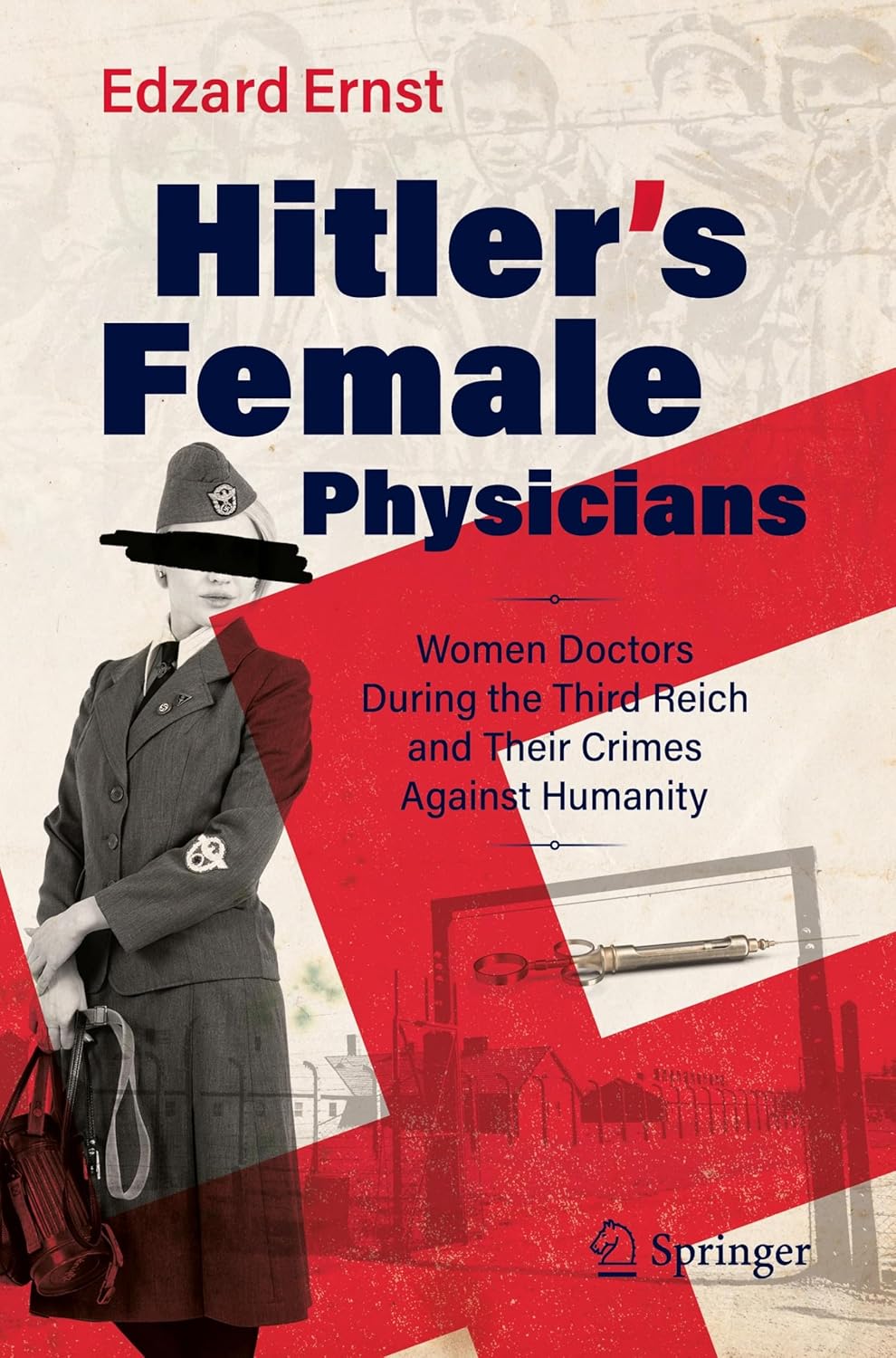 The initial chapters provide some context by briefly reviewing some of the worst atrocities of the Nazis:
- the mass sterilisations of citizens who were deemed to be genetically inferior,
- the killing of disabled patients who were considered unworthy of life,
- the mass murder of Jews and other unwanted people.
The book highlights the central role of the German medical profession in all of these barbarities. It explains that, far from being bystanders, German doctors first adopted essential elements of the Nazi ideology, such as ‘race hygiene’, developed the necessary methodologies for mass murder, and later put them into action.
Studying the vast literature on the Third Reich, one easily gets the impression that the monstrosities that followed were an almost exclusively male affair. Many of the most famous Nazi villains were men. What is often forgotten is the fact that women were involved as well – and this is particularly true for medicine.
The main part of the book provides biographical sketches of 38 female physicians who committed highly unethical acts in the name of Nazi ideology. The actions of these women varied greatly; some murdered with their own hands, while others merely promoted or sanctioned such criminality.
When I studied medicine in Munich during the 1970s, some of the ‘doctors of infamy’ became my teachers (either in person or through their textbooks). As students, we had the option of ignoring all this by persuading ourselves that “it has nothing to do with me”. Most of us did exactly that. However, some took a different path, and it is not least thanks to their research that today we know more about the involvement of the German medical profession in the horrors of the Third Reich. My book summarises a hitherto much-neglected aspect. If it can make a small contribution to our understanding of the Nazi doctors’ crimes against humanity, the often depressing process of writing it will have been worthwhile.
The General Chiropractic Council (GCC) has signed a memorandum of understanding with NHS England, the Crown Prosecution Service and the National Police Chiefs’ Council to collaborate where there is suspected criminal activity on the part of a GCC member in relation to the provision of clinical care or care decision-making.
I find this interesting and most laudable!
But I also have seven questions, e.g.:
- Does it amount to criminal activity in relation to the provision of clinical care or care decision-making, if a chiropractor explains that the patient’s problem is caused by a subluxation of the spine, an entity that does not even exist? Apparently this happens every day.
- Does it amount to criminal activity in relation to the provision of clinical care or care decision-making, if a chiropractor treats a patient without prior informed consent? Apparently, this happens regularly.
- Does it amount to criminal activity in relation to the provision of clinical care or care decision-making, if a chiropractor fails to warn a patient that his/her manipulations can cause harm and even put him/her in a wheelchair? Apparently this (the lack of warning) happens all the time, and some chiropractors even insist that their manipulations are entirely safe.
- Does it amount to criminal activity in relation to the provision of clinical care or care decision-making, if a chiropractor claims that spinal manipulations are effective for curing the patient’s problem, while the evidence does not support the claim? Apparently this happens more often than not.
- Does it amount to criminal activity in relation to the provision of clinical care or care decision-making, if a chiropractor persuades a patient to have expensive long-term maintenance therapy for preventing health problems, while the evidence for that appoach is less than convincing? Apparently this happens rather frequently.
- Does it amount to criminal activity in relation to the provision of clinical care or care decision-making, if the chiropractor issues advice that is both outside his/her competence and detrimental to the health of the patient (for instance, advising parents not to vaccinate their kids)? Apparently this happens a lot.
- Does it amount to criminal activity in relation to the provision of clinical care or care decision-making, if a chiropractor advises a patient not to do what a real doctor told him/her to do? Apparently this is far from a rare occurance.
I would be most grateful, if the GCC would take the time to answer the above questions.
Many thanks in advaance.
THE TIMES recently published an interview with (my ex-friend) Michael Dixon, a person who has featured regularly on this blog. Here is a short passage relevant to our many discussions about homeopathy:
“Can I say on the record I’ve never studied homeopathy,” he says. “I’ve never even offered homeopathy. What I have done is said that if patients feel they’ve benefited from homeopathy, what’s the problem?”
The problem, scientists would argue, is that homeopathy undermines trust in real, evidence-based medicine. Homeopathic remedies are made by diluting active ingredients in water, often so that none of the original substance remains. Homeopathy has been banned on the NHS since 2017, because it is “at best a placebo”.
For Dixon, however, this “trench warfare” divide between alternative and conventional medicine is too binary. Even if something is scientifically impossible, as long as it helps his patients that is all that matters, Dixon says. “Many years ago, a Christian faith healer started seeing some of my patients. She made a lot of them better. I didn’t care a damn if it’s placebo — they got better,” he says.
While he thinks homeopathy can serve a purpose on the NHS, he draws a line at the “madness of some of the more wayward complementary practitioners” who will argue for using homeopathy to vaccinate children. “I would always advocate against anyone going for complementary medicine if there’s good evidence-based conventional medicine.”
Apart from
- the hilarious implication that a faith healer is NOT a “wayward practitioner”,
- the fact that, as far as I know, nobody ever claimed that Dixon studied homeopathy,
- the fact that Dixon does not understand what, according to scientists, the problems with homeopathy are,
his statements seem very empathetic at first glance.
Dixon’s key argument – if patients feel they’ve benefited from homeopathy, why not prescribe it – is an often-voiced notion. But that does not make it correct!
A physician’s duty is not primarily to please the patient. His/her duty foremost is to behave responsibly and to treat patients in the most effective way. And this includes, in a case where the patient feels to have benefitted from a useless or dangerous treatment, to inform the patient about the current best evidence. To me, this is obvious, to others, including Dixon, it seems not. Let me therefore ask you, the reader of these lines: what is the right way to act as a GP?
SCENARIO DIXON
Patient wants a treatment that is far from optimal and claims to have experienced benefit from it. The GP feels this is enough reason to prescribe it, despite plenty of evidence that shows the treatment in question has at best a placebo effect. Thus the doctor agrees to his/her patient taking homeopathy.
SCENARIO ERNST
Patient wants a treatment that is far from optimal and claims to have experienced benefit from it. The doctor takes some time to explain the the therapy is not effective and that, for the patient’s condition, there are treatments that would be better suited. The patient reluctantly agrees and the doctor prescribes a therapy that is backed by sound evidence (in case the patient resists, he/she is invited to see another doctor).
I admit that risking to lose a patient to another colleague is not an attractive prospect, particularly if the patient happens to be your King. But nobody ever said that medicine was easy – and it certainly is not a supermarket were customers can pick and choose as they please.
What do you think?
It has been reported that the Dresden Higher Regional Court (OLG) examined the extent to which a doctor must inform his patient, if he/she uses so-called alternative medine (SCAM) that deviates from conventional medicine. To be precise, the case was about a detoxification therapy with so-called chelating agents. A patient had received ‘holistic treatment’ for symptoms of exhaustion with sleep disorders, headaches, concentration problems and general restlessness and became worse and worse during the course of the therapy. Eventually, he sued for compensation for pain and suffering and damages.
Initially, the patient had been treated conservatively with iron supplements. After carrying out ‘provocation test’, the doctor diagnosed a heavy metal load, which he treated with ‘elimination therapy’ in the form of an i.v. “detox therapy” (2-3-dimercaptopropane-1-sulfonate (DMPS)). The patient subsequently became increasingly unwell, leading to hospitalisation and treatment for severe thrombocytopenia with moderate liver damage.
The expert opinion obtained in the first-instance of the ensuing legal proceedings considered the cause of the patient’s complaints to be the administration of an inadmissibly excessive amount of alpha-lipoic acid during ‘detoxification therapy’. It became clear that the doctor had not properly informed the patient about this therapy and its risks.
The court considered that the basic information required under German law had not been provided. This basic information gives the patient a general idea of the severity of the procedure and the impact of the associated burdens on their lifestyle. The obligation to provide information also applies to practitioners who use SCAM. A doctor who offers SCAM must therefore clearly inform the patient that they are deviating from a conventional approach. He/she must also explain why he/she is doing this and what advantages and disadvantages the patient can expect as a result.
Detoxification therapy is indisputably such a SCAM, the costs of which are not covered by the health insurance companies. The patient must therefore not only be informed of the risks and the danger of failure of the procedure, but must also be informed that the planned therapy is not standard medical practice and that the effectiveness of the therapy is unproven.
The patient must be able to weigh up whether they want to take the risks of treatment with regard to the prospects of success in view of their state of health before the procedure. Such information was not provided in the present case. For this reason, the Regional Court awarded damages for pain and suffering amounting to EUR 15,000 for the damage to health suffered.
__________________________
On this blog, we have often discussed the problems of informed consent. Informed consent, I have previously stated, must usually include full information on:
- the diagnosis
- its natural history
- the most effective treatment options available
- the proposed therapy
- its effectiveness
- its risks
- its cost
- a rough treatment plan
Only when this information has been transmitted to and understood by the patient can informed consent be considered complete. I do understand why many SCAM practitioners do not like informed consent – it could stop many from practising: they are frequently unable to provide the required information. Yet, ALL clinicians have a moral, ethical and legal duty to obtain informed consent BEFORE starting a therapy. It is reassuring that the German court agrees.
In the last 2 years of the pandemic, a wide range of cases of post-COVID functional gastrointestinal disorders (PC-FGIDs) has been reported. This case series aimed to investigate the role of homeopathic intervention in the treatment of PC-FGIDs.
This is a retrospective analysis of the clinical data of individuals who had suffered from PC-FGIDs that were diagnosed based on clinical symptoms using the Gastrointestinal Symptoms Rating Scale (GSRS) and treated exclusively with individualized homeopathic medicines. Cases that had undergone regular monthly assessment using the GSRS and had a Post-COVID-19 Functional Status (PCFS) score for up to 3 months were considered.
Thirty cases were screened and twelve were included according to the study criteria. The mean age of seven women and five men was 36 years. GSRS and PCFS scores showed marked improvement in each of 10 cases within the 3-month treatment period.
The authors concluded that homeopathic intervention proved beneficial in 10 of 12 patients with PC-FGIDs. The findings may help researchers plan future controlled clinical studies in this field.
There is a lot wrong here.
In fact, it is hard to find anything that is right!
What is true is that post-COVID functional gastrointestinal disorders have become a big problem.
What is questionable or plainly wrong is the following:
- The underlying assumption that homeopathy can cure post-COVID functional gastrointestinal disorders is implausible.
- A case series cannot meaningfully investigate the role of a treatment in managing any condition.
- A retropective analysis can do this even less.
- Treating seriously ill patients exclusively (i.e. not applying any other therapeutic measures) with individualized homeopathic medicines is surely unethical.
- Selecting cases for this analysis can introduce bias.
- A sample size of 12 is too small for producing a generalisable finding.
- Attributing the observed improvement to the homeopathic treatment is unwarranted; there are many other factors, not least the natural history of the condition.
For all we know, the 12 patients might have improved more dramatically if they had NOT received any homeopathy at all.
My conclusion is this:
The editor of the journal HOMEOPATHY, the peer-reviewers of this paper, the authors of the article and their institutions should all bow their heads in shame – this is certainly one of the worst and most dangerously misleading paper I have come across in a long time!
Terry Power had been registered as a chiropractor since 1988, and as a Chinese medicine practitioner since 2012. In 2020, two female patients (Patient A and Patient B), made separate and unrelated complaints about Power to NSW Police and subsequently to the Health Care Complaints Commission.
Patient A alleged that, during a consultation in May 2020, Power kneaded and squeezed her right breast. Patient B alleged that during a consultation on 14 July 2020, Dr Power inserted two fingers into her vagina. On 27 August 2020, in proceedings conducted under Health Practitioner Regulation National Law (NSW), the Chiropractic and Chinese Medical Council of New South Wales imposed several conditions on Power’s registration including that he must not consult or treat female clients. Subsequently, Power did not practised as a chiropractor, or a Chinese medicine practitioner, since those conditions were imposed.
Power admits inserting his fingers into Patient B’s vagina but denies that he did not do so without “proper and sufficient clinical indications” as alleged by the Commission. In addition, Power denies kneading and squeezing Patient A’s right breast.
In January 2023, following investigation of complaints referred by the Council, the Commission lodged a complaint about Power with the New South Wales Civil and Administrative Tribunal (NCAT). With the leave of the Tribunal, the Commission amended that complaint. In May 2024, NCAT found Power to be guilty of professional misconduct. NCAT will determine the appropriate disciplinary orders at a future hearing.
The statements of Patient B are harrowing:
After being escorted to a treatment room and changing into a hospital gown, Patient B said to Power “I am in a lot of pain due to my chronic pain”. Power then put his hand on Patient B’s pubic bone, which was “right on the pain”, “my legs gave out and I collapsed down. I was in pain” … Power lifted her up to crack her back, a procedure he had undertaken before and with which she was comfortable. Power then instructed her to lie down on her side on the treatment table and began to manipulate her hips. He said that her right hip was “out of place” and then cracked her neck. She was still in pain. Power then said, “you can say no, but how do you feel about an internal?”, to which she replied “if it is going to help then yes”. While standing to her side, Power put on white latex gloves and then inserted two gloved fingers into her vagina. This caused some pain and discomfort. Patient B could feel Power’s fingers pressing on parts of her body inside her vagina, “it hurt like hell and I wanted to scream”. After a minute Power pulled out his fingers. Patient B then asked, “what did you find?”, Power responded by walking over to a skeleton in the treatment room and showing her what he had done. He talked about the muscles and said, “I felt where your ovary was missing. The muscles are really tight around where the ovary was and your uterus”. Power then administered acupuncture above and below her breasts. The entire consultation lasted about an hour. At the end Power said words to the effect “we will see you next time”.
Patient B got dressed and walked out without making another appointment … On 29 July 2020 … when she told the GP “what happened with the chiropractor”, Patient B “broke down in tears and was an emotional wreck”. On return to her grandmother’s house, Patient B collapsed into her mother’s arms and rang the Commission and the Health Board, who instructed her to “make a police report and contact the Health Professional Council”. In conclusion Patient B said: “When I saw Terry Power on the 14th of July 2020, I trusted his professional opinions. When he asked me to consent to him doing an internal on me, I thought at the time this was a normal procedure and l trusted him. My pain is at a stage that I would do anything to have it relieved. At no time during the procedure was another person with Terry.”
__________________________
Was patient B’s right hip was “out of place”?
No.
Is there any justification for a chiropractor to insert two fingers into a patient’s vagina?
No.
Does the question: “you can say no, but how do you feel about an internal?” amount to anything like informed consent?
No.
Is the description “he muscles are really tight around where the ovary was and your uterus” credible?
No.
But this is merely a case report of a chiropractor whom others might classify as a ‘rotten apple’ within their profession. I would, however, point out that such cases are not as rare as we might hope.
A retrospective review of data from the California Board of Chiropractic Examiners, for instance, was aimed at determining categories of offense, experience, and gender of disciplined doctors of chiropractic (DC) in California and compare them with disciplined medical physicians. The authors concluded that the professions differ in the major reasons for disciplinary actions. Two thirds (67%) of the doctors of chiropractic were disciplined for fraud and sexual boundary issues, compared with 59% for negligence and substance misuse for medical physicians.
And what’s the explanation?
Could it be that chiropractors have no or too little education and training in medical ethics?