Monthly Archives: July 2018
Alternative practitioners practise highly diverse therapies. They seem to have nothing in common – except perhaps that ALL of them are allegedly stimulating our self-healing powers (and except that most proponents are latently or openly against vaccinations). And it is through these self-healing powers that the treatments in question cure anything and become a true panacea. When questioned what these incredible powers really are, most practitioners would (somewhat vaguely) name the immune system as the responsible mechanism. With this post, I intend to provide a short summary of the evidence on this issue:
Acupuncture: no good evidence to show stimulation of self-healing powers.
Aromatherapy: no good evidence to show stimulation of self-healing powers.
Bioresonance: no good evidence to show stimulation of self-healing powers.
Chiropractic: no good evidence to show stimulation of self-healing powers.
Detox: no good evidence to show stimulation of self-healing powers.
Energy healing: no good evidence to show stimulation of self-healing powers.
Feldenkrais: no good evidence to show stimulation of self-healing powers.
Gua sha: no good evidence to show stimulation of self-healing powers.
Herbal medicine: no good evidence to show stimulation of self-healing powers.
Homeopathy: no good evidence to show stimulation of self-healing powers.
Macrobiotics: no good evidence to show stimulation of self-healing powers.
Naturopathy: no good evidence to show stimulation of self-healing powers.
Osteopathy: no good evidence to show stimulation of self-healing powers.
Power bands: no good evidence to show stimulation of self-healing powers.
Reiki: no good evidence to show stimulation of self-healing powers.
Reflexology: no good evidence to show stimulation of self-healing powers.
Shiatsu: no good evidence to show stimulation of self-healing powers.
Tai chi: no good evidence to show stimulation of self-healing powers.
TCM: no good evidence to show stimulation of self-healing powers.
Vibrational therapy: no good evidence to show stimulation of self-healing powers.
Vaccinations: very good evidence to show stimulation of self-healing powers.
THE END
The Impact Factor (IF) of a journal is a measure reflecting the yearly average number of citations to recent articles published in that journal. It is frequently used as a measure of the importance of a journal within its field; journals with higher impact factors are often deemed to be more important than those with lower ones. The IF for any given year can be calculated as the number of citations, received in that year, of articles published in that journal during the two preceding years, divided by the total number of articles published in that journal during the two preceding years.
A press-release celebrated the new IF of the journal ‘HOMEOPATHY’ which has featured on this blog before. I am sure that you all want to share in this joy:
START OF QUOTE
For the second year running there has been an increase in the number of times articles published in the Faculty of Homeopathy’s journal Homeopathy have been cited in articles in other peer-reviewed publications. The figure known as the Impact Factor (IF) has risen from 1.16 to 1.524, which represents a 52% increase in the number of citations.
An IF is used to determine the impact a particular journal has in a given field of research and is therefore widely used as a measure of quality. The latest IF assessment for Homeopathy covers citations during 2017 for articles published in the previous two years (2015 and 2016).
Dr Peter Fisher, Homeopathy’s editor-in-chief, said: “Naturally the editorial team is delighted by this news. This success is due to the quality and international nature of research and other content we publish. So I thank all those who have contributed such high quality papers, maintaining the journal’s position as the world’s foremost publication in the scholarly study of homeopathy. I would particularly like to thank our senior deputy editor, Dr Robert Mathie for all his hard work.”
First published in 1911 as the British Homoeopathic Journal, Homeopathy is the only homeopathic journal indexed by Medline, with over 100,000 full-text downloads per year. In January 2018, publishing responsibilities for the quarterly journal moved to Thieme, an award-winning medical and science publisher.
Greg White, Faculty chief executive, said: “Moving to a new publisher can be difficult, but the decision we took last year is certainly paying dividends. I would therefore like to thank everyone at Thieme for the part they are playing in the journal’s continued success.”
END OF QUOTE
While the champagne corks might be popping in homeopathic circles, I want to try and give some perspective to this celebration.
The IP has rightly been criticised so many times for so many reasons, that it is now not generally considered to be a valuable measure for anything. The main reason for this is that it can be (and is being) manipulated in numerous ways. But even if we accept the IP as a meaningful parameter, we must ask what an IP of 1.5 means and how it compares to other medical journals’ IP.
Here are some IFs of general and specialised medical journals readers of this blog might know:
Annals Int Med: 2016/2017 Impact Factor : 17.135,
BMJ: 2016/2017 Impact Factor : 20.785,
Circulation: 2016/2017 Impact Factor : 19.309,
Diabetes Care: 2016/2017 Impact Factor : 11.857,
Gastroenterology: 2016/2017 Impact Factor : 18.392,
Gut: 2016/2017 Impact Factor : 16.658,
J Clin Oncol: 2016/2017 Impact Factor : 24.008,
Lancet: 2016/2017 Impact Factor : 47.831,
Nature Medicine: 2016/2017 Impact Factor : 29.886,
Plos Medicine: 2016/2017 Impact Factor : 11.862,
Trends Pharm Sci: 2016/2017 Impact Factor : 12.797,
This selection seems to indicate that an IF of 1.5 is modest, to say the least. In turn, this means that the above press-release is perhaps just a little bit on the hypertrophic side.
But, of course, it’s all about homeopathy where, as we all know, LESS IS MORE!
I stumbled over an article entitled ‘The myths of homeopathy: Resounding answers‘. I thought it was great fun, so much so, that I copied it below – not just once but twice. The second time I took the liberty of replacing the little porkies told by homeopaths with the truth.
THE ORIGINAL
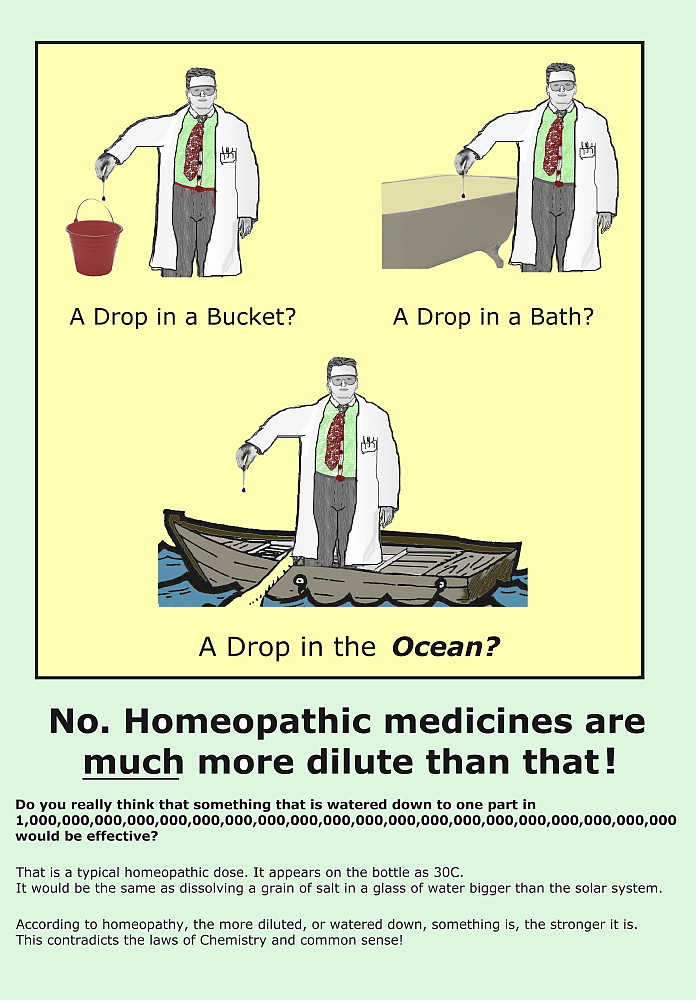
Homeopathic medicines are not placebos! Little “pellets” of sugar cannot have an effect!
Of course, the sugar in homeopathic pellets doesn’t have any effect. This is why we also have tablets and drops that contain homeopathic active substances.
The sugar is simply a medium for these active substances. The important element is what has been added to the sugar – the active ingredient!
As homeopathic remedies have very slow action, they cannot be used to treat acute illnesses!
This is incorrect. You can successfully use homeopathy in acute circumstances such as infections, fevers and colds.
Homeopathy seems to be a kind of magic!
Homeopathy is not magic! Homeopathy is a field of medicine that has the capacity to heal, but if course, it has its limits, just like any other medicine, including conventional medicine.
To give you a clear example – it’s unlikely that homeopathy will replace a surgical intervention.
During homeopathic treatment you have to follow a strict diet!
Well, it’s not such a bad thing…but of course, you need to eat healthily and avoid smoking, drinking alcohol and coffee.
In some cases you can’t eat onion or garlic as they contain sulphur, which is a homeopathic remedy in itself. All of these things have little to do with a strict diet.
Diabetes sufferers can’t use homeopathic remedies!
This is not true. The amount of sugar in the pellets is negligible. These homeopathic pellets could even be taken on a daily basis. The foods we eat contain much more sugar, even those that are especially for diabetics.
MY CORRECTED VERSION
Homeopathic medicines are not placebos! Little “pellets” of sugar cannot have an effect!
Of course, the sugar in homeopathic pellets doesn’t have any effect. And the drops added also contain no active substances.
In other words, there is no active ingredient!
As homeopathic remedies have very slow action, they cannot be used to treat acute illnesses!
This is correct. You cannot successfully use homeopathy in acute circumstances such as infections, fevers and colds. In fact, you cannot use it to cure any condition, chronic or acute.
Homeopathy seems to be a kind of magic!
Homeopathy is not magic! It relies on the placebo and other non-specific effects, and that is no magic.
During homeopathic treatment you have to follow a strict diet!
Hahnemann gave very clear instructions to avoid a whole range of things while taking homeopathic remedies – otherwise, they don’t work, he claimed. This is as wrong as everything else Hahnemann said about homeopathy: these remedies don’t work whatever you do.
Diabetes sufferers can’t use homeopathic remedies!
This is not true. The amount of sugar in the pellets is negligible. These homeopathic pellets could even be taken on a daily basis. The foods we eat contain much more sugar, even those that are especially for diabetics. But that does, of course, not mean that diabetics ought to take homeopathic remedies. There is no reason why they should; these remedies are pure placebos.
__________________________________________________________________________
Few people reading these lines will be surprised that the ‘resounding answers’ turn out to be resounding lies. And what I above called ‘great fun’, turns out to be a serious deception.
The fascinating thing here is, I think, the way homeopaths try to mislead the public: one seemingly innocent untruth about the ‘active substance’ is used as the basis for an entire house of cards. It tumbles at the slightest attempt to provide the facts. Sadly, many consumers do not know the facts and are therefore prone to fall victim of these resounding lies.
There is perhaps not a law against such lies, but there certainly are moral and ethical principles that must not be violated:
TELLING LIES OF THIS NATURE IS UNETHICAL AND ENDANGERS THE HEALTH OF THOSE WHO DO NOT KNOW THE FACTS.
Why do most alternative practitioners show such dogged determination not to change their view of the efficacy of their therapy, even if good evidence shows that it is a placebo? This is the question that I have been pondering for some time. I have seen many doctors change their mind about this or that treatment in the light of new evidence. In fact, I have not seen one who has not done so at some stage. Yet I have never seen an alternative therapist change his/her mind about his/her alternative therapy. Why is that?
You might say that the answers are obvious:
- because they have heavily invested in their therapy, both emotionally and financially;
- because their therapy has ‘stood the test of time’;
- because they believe what they were taught;
- because they are deluded, not very bright, etc.;
- because they need to earn a living.
All of these reasons may apply. But do they really tell the whole story? While contemplating about this question, I thought of something that had previously not been entirely clear to me: they simply KNOW that the evidence MUST be wrong.
Let me try to explain.
Consider an acupuncturist (I could have chosen almost any other type of alternative practitioner) who has many years of experience. He has grown to be a well-respected expert in the world of acupuncture. He sits on various committees and has advised important institutions. He knows the literature and has treated thousands of patients.
This experience has taught him one thing for sure: his patients do benefit from his treatment. He has seen it happening too many times; it cannot be a coincidence. Acupuncture works, no question about it.
And this is also what the studies tell him. Even the most sceptical scientist cannot deny the fact that patients do get better after acupuncture. So, what is the problem?
The problem is that sceptics say that this is due to a placebo effect, and many studies seem to confirm this to be true. Yet, our acupuncturist completely dismisses the placebo explanation.
Why?
- Because he has heavily invested in their therapy? Perhaps.
- Because acupuncture has ‘stood the test of time’? Perhaps.
- Because he believes what he has been taught? Perhaps.
- Because he is deluded, not very bright, etc.? Perhaps.
- Because he needs to earn a living? Perhaps.
But there is something else.
He has only ever treated his patients with acupuncture. He has therefore no experience of real medicine, or other therapeutic options. He has no perspective. Therefore, he does not know that patients often get better, even if they receive an ineffective treatment, even if they receive no treatment, and even if they receive a harmful treatment. Every improvement he notes in his patients, he relates to his acupuncture. Our acupuncturist never had the opportunity to learn to doubt cause and effect in his clinical routine. He never had to question the benefits of acupuncture. He never had to select from a pool of therapies the optimal one, because he only ever used acupuncture.
It is this lack of experience that never led him to think critically about acupuncture. He is in a similar situation as physicians were 200 years ago; they only (mainly) had blood-letting, and because some patients improved with it, they had no reason to doubt it. He only ever saw his successes (not that all his patients improved, but those who did not, did not return). He simply KNOWS that acupuncture works, because his own, very limited experience never forced him to consider anything else. And because he KNOWS, the evidence that does not agree with his knowledge MUST be wrong.
I am of course exaggerating and simplifying in order to make a point. And please don’t get me wrong.
I am not saying that doctors cannot be stubborn. And I am not saying that all alternative practitioners have such limited experience and are unable to change their mind in the light of new evidence. However, I am trying to say that many alternative practitioners have a limited perspective and therefore find it impossible to be critical about their own practice.
If I am right, there would be an easy (and entirely alternative) cure to remedy this situation. We should sent our acupuncturist to a homeopath (or any other alternative practitioner whose practice he assumes to be entirely bogus) and ask him to watch what kind of therapeutic success the homeopath is generating. The acupuncturist would soon see that it is very similar to his own. He would then have the choice to agree that highly diluted homeopathic remedies are effective in curing illness, or that the homeopath relies on the same phenomenon as his own practice: placebo.
Sadly, this is not going to happen, is it?
Homeopaths are not generally known for the reliability of their recommendations. This advice by the UK Society of Homeopaths (SoH) was emailed to me a few days ago (how on earth did they know I was on holiday?). It is just too weird and wonderful – I cannot resist the temptation of showing it to you:
START OF QUOTE
Off on holiday? Whether you’re going abroad or ‘staycationing’, keep these remedies handy to tackle a range of minor ailments. We suggest 30c potencies for all remedies, using every 30- 90 minutes, two or three times depending on the severity of the condition. Always seek medical help for anything more than a minor injury or illness.
Aconite Great for shock, such as from fright, bad news or after having a fall. Also good for the onset of fever after exposure to acute cold, wind or heat.
Apis For bee or wasp stings and any allergic reaction which causes rapid swelling, redness and pain and where the affected area is puffy, white or rosy, feels hot and is better for cold compresses.
Arnica The classic remedy for trauma, injury and bruising. The typical arnica patient will tell you that they are fine but may well be confused or in shock. Also useful for fractures, strains after exertion such as lifting heavy objects and the early stages of a black eye and for jetlag.
Arsenicum This is a great remedy for food poisoning, especially from meat. The person will be very anxious and not easily pacified. The pains are often burning. Vomiting and diarrhoea accompanied by chills, exhaustion, and restless.
Belladonna Great for heatstroke or exhaustion, along with appropriate cooling and rehydration therapy, and for acute fevers or inflammations, which come on suddenly and lead to throbbing pain, redness and swelling. The skin is hot and red and the face flushed but, at the same time, the person can feel chilly and want to be covered.
Ledum This is the first remedy to think of with puncture wounds and for bites and stings which fester. Good for twisted or sprained joints, especially ankles.
Nux Vomica The main remedy for hangover or indigestion from over-eating but also useful for food poisoning in which there is constant retching.
Urtica urens Very useful for skin conditions such as urticaria with raised lumps like nettle rash and great for ‘prickly heat. Urtica can be used for minor burns and scalds as well where pains are stinging, like nettle rash, but not too sore to touch.
END OF QUOTE
I find the list and particularly the comments most revealing. To me, they suggest that homeopathy just do not have a cue. They recommend nonsense for conditions they know nothing about. They do not seem to know what real shock or food poisoning or heat stroke are. They do not seem to appreciate that they can be life-threatening problems. And by stating “Always seek medical help for anything more than a minor injury or illness”, they clearly admit that they are merely jokers of no significance whatsoever.
For what it’s worth, I here give my evidence-based view on the remedies listed:
Aconite No evidence to justify the claims mentioned above.
Apis No evidence to justify the claims mentioned above.
Arnica Some evidence to show that Arnica does not work.
Arsenicum No evidence to justify the claims mentioned above.
Belladonna No evidence to justify the claims mentioned above.
Ledum No evidence to justify the claims mentioned above.
Nux Vomica No evidence to justify the claims mentioned above.
Urtica urens No evidence to justify the claims mentioned above.
Oh, I almost forgot: the SoH is the organisation of ‘professional’ homeopaths in the UK (professional meaning they have no medical training). On their website, they state: “High standards are the cornerstone of the Society of Homeopaths. So we were delighted that our register was accredited by the Professional Standards Authority for Health and Social Care (PSA) in 2014… This accreditation demonstrates our commitment to high professional standards, to enhancing safety and delivering a better service.”
One does wonder whether killing gullible holidaymakers via bad advice counts as high standards.
Several previous studies have suggested improvements in sperm quality after vitamin supplementation, and several reviews have drawn tentatively positive conclusions:
- The current literature seems to suggest a beneficial effect of antioxidants on male infertility.
- Several studies have reported a significant increase in sperm quality and pregnancy rates when the men were supplemented by specific vitamins and micronutrients
- For those undergoing assisted reproduction, the odds ratio that antioxidant use would improve pregnancy rates was 4.18, with a 4.85-fold improvement in live birth rate also noted.
Most of the primary trials lacked scientific rigour, however. Now a new study has emerged that overcomes many of the flaws of the previous research.
Professor Anne Steiner from the University of North Carolina at Chapel Hill, USA, presented her study yesterday at the 34th Annual Meeting of ESHRE in Barcelona. This clinical trial of 174 couples has found that an antioxidant formulation taken daily by the male partner for a minimum of three months made no difference to sperm concentration, motility or morphology, nor to the rate of DNA fragmentation. The study was performed in eight American fertility centres.
All men in the study had been diagnosed with male factor infertility, reflected in subnormal levels of sperm concentration, motility, or morphology, or higher than normal rates of DNA fragmentation. These parameters were measured at the start of the trial and at three months. In between, the men allocated to the antioxidant intervention were given a daily supplement containing vitamins C, D3 and E, folic acid, zinc, selenium and L-carnitine; the control group received a placebo.
At three months, results showed only a “slight” overall difference in sperm concentration between the two groups, and no significant differences in morphology, motility, or DNA fragmentation measurements. Sub-group analysis (according to different types of sperm abnormality) found no significant differences in sperm concentration (in oligospermic men), motility (in asthenospermic men), and morphology (in teratospermic men).(1) There was also no change seen after three months in men with high rates of DNA fragmentation (28.9% in the antioxidant group and 28.8 in the placebo group).
Natural conception during the initial three month study period did also not differ between the two groups of the entire cohort – a pregnancy rate of 10.5% in the antioxidant group and 9.1% in the placebo. These rates were also comparable at six months (after continued antioxidant or placebo for the male partner and three cycles of clomiphene and intrauterine insemination for the female partner).
The authors concluded that “the results do not support the empiric use of antioxidant therapy for male factor infertility in couples trying to conceive naturally”.
The story about supplements and health claims seems to be strangely repetitive:
- the claim that supplements help for condition xy is heavily promoted, e. g. via the Internet;
- a few flimsy trials seem to support the claim;
- these results are relentlessly hyped;
- the profit of the manufacturers grows;
- eventually a rigorous, independently-funded trial emerges with a negative finding;
- the card house seems to collapse;
- the manufacturers claim that the trial’s methodology was faulty (e. g. wrong does, wrong mixture of ingredients);
- thus another profitable card house is built elsewhere.
In the end, the only supplement-related effects are that 1) the consumers produce expensive urine and 2) the manufacturers have plenty of funds to start a new campaign based on yet another bogus heath claim.
Live Blood Analysis (LBA) is a diagnostic tool used by some SCAM practitioners (e. g. chiropractors, naturopaths, medics). It marks a new era of scientific discovery, at least this is what its proponents claim. LBA sounds impressive, looks impressive, commands impressive revenue – but, once we investigate a little closer, it turns out to be rather unimpressive.
The principle of LBA is fairly simple: a drop of blood is taken from your fingertip, put on a glass plate and viewed via a dark field microscope on a video screen. Despite the claims made for it, LBA is by no means new; using his lately developed microscope, Antony van Leeuwenhoek observed in 1686 that living blood cells changed shape during circulation. Ever since, doctors, scientists and others have studied blood samples in this and many other ways.
New, however, is what today’s SCAM practitioners claim to be able to do with LBA. Proponents believe that the method provides information about the state of the immune system, possible vitamin deficiencies, amount of toxicity, pH and mineral imbalance, areas of concern and weaknesses, fungus and yeast infections, as well as just about everything else you can imagine.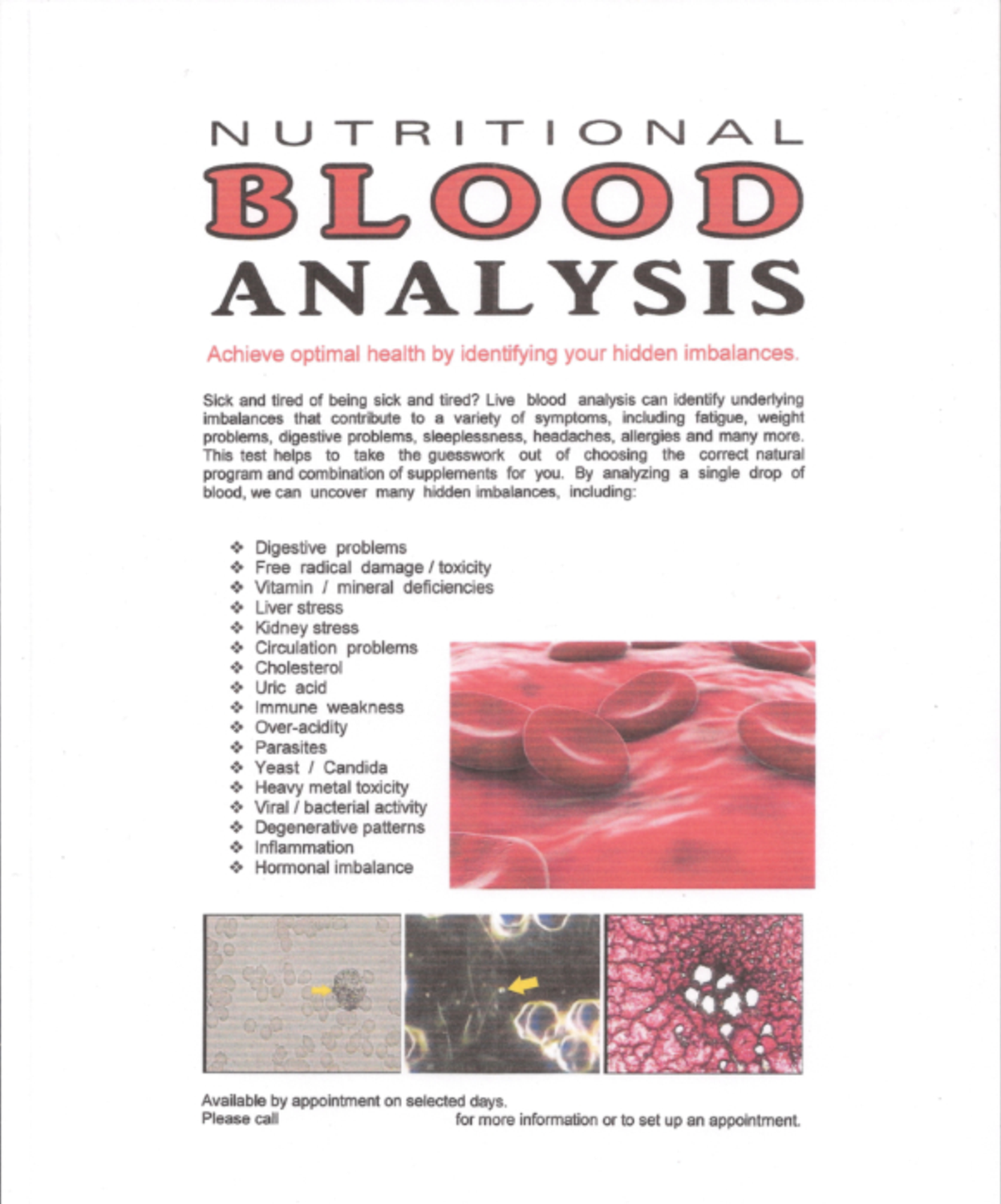
LBA is based on assumptions that are not plausible and on a misinterpretation of phenomena that are well-understood (some of them were the subject of research I did some 4 decades ago). What is more, the reliability of LBA as a diagnostic tool has never been verified. The results of the only two studies suggest that the method is not reliable:
BACKGROUND: Dark field microscopy according to Enderlin claims to be able to detect forthcoming or beginning cancer at an early stage through minute abnormalities in the blood. In Germany and the USA, this method is used by an increasing number of physicians and health practitioners (non-medically qualified complementary practitioners), because this easy test seems to give important information about patients’ health status.
OBJECTIVE: Can dark field microscopy reliably detect cancer?
MATERIALS AND METHODS: In the course of a prospective study on iridology, blood samples were drawn for dark field microscopy in 110 patients. A health practitioner with several years of training in the field carried out the examination without prior information about the patients.
RESULTS: Out of 12 patients with present tumor metastasis as confirmed by radiological methods (CT, MRI or ultra-sound) 3 were correctly identified. Analysis of sensitivity (0.25), specificity (0.64), positive (0.09) and negative (0.85) predictive values revealed unsatisfactory results.
CONCLUSION: Dark field micoroscopy does not seem to reliably detect the presence of cancer. Clinical use of the method can therefore not be recommended until future studies are conducted.
CONTEXT: In 1925, the German zoologist Günther Enderlein, PhD, published a concept of microbial life cycles. His observations of live blood using darkfield microscopy revealed structures and phenomena that had not yet been described. Although very little research has been conducted to explain the phenomena Dr. Enderlein observed, the diagnostic test is still used in complementary and alternative medicine.
OBJECTIVE: To test the interobserver reliability and test-retest reliability of 2 experienced darkfield specialists who had undergone comparable training in Enderlein blood analysis.
SETTING: Inpatient clinic for internal medicine and geriatrics.
METHODS: Both observers assessed 48 capillary blood samples from 24 patients with diabetes. The observers were mutually blind and assessed their findings according to a specific item randomization list that allowed observers to specify whether Enderlein structures were visible or not.
RESULTS: The interobserver reliability for the visibility of various structures was kappa = .35 (95% CI: .27-.43), the test-retest reliability was kappa = .44 (95% CI: .36-.53).
CONCLUSIONS: This pilot study indicates that Enderlein darkfield analysis is very difficult to standardize and that the reliability of the diagnostic test is low.
So what?, some might think. It might be a SCAM, but it is a harmless one!
Wrong!
LBA is likely to produce false-positive and false-negative diagnoses.
A false-positive diagnosis is a condition which the patient does not truly have. This means she will receive treatments that are not necessary, potentially harmful and financially wasteful.
A false-negative diagnosis would mean that the patient is told she is healthy, while in fact she is not. This can cost valuable time to start an effective therapy and, in extreme cases, it would hasten the death of that patient.
The conclusion is thus clear: LBA is an ineffective, potentially dangerous diagnostic method for exploiting gullible consumers. My advice is to avoid practitioners who employ this technique.
With depressing regularity, we hear that this or that VIP has decided to travel to Germany to get her/his cancer cured. As long as I can remember, cancer quackery has been wide-spread in Germany. More recently, dozens of private clinics have sprung up that seem to specialise in treating rich, foreign cancer patients. The message they like to send out is that, in Germany, one gets more advanced and effective treatments.
Having looked at some of the clinics’ websites, I do, however, not get the impression that this is true. For instance, one clinic that is often mentioned offers amongst other treatments the following (the descriptions are quotes from the clinic’s website):
- Orthomolecular medicine aims to restore the ideal and beneficial environment of the body by correcting molecular imbalances, and this approach is used in cancer, infections, depression and atherosclerosis, among others.
- Here at the Hallwang Private Oncology Clinic every patient receives a well-balanced supportive infusion program consisting of anti-inflammatory, potent anti-oxidant and detoxifying substances, which help you recover from previous treatments, minimize side effects from current treatments and strengthen your immune system to enhance treatment effects. Substances used are for example vitamin C, selenium, zinc, L-ornithine aspartate, glutathione, alpha lipoic acid, among many others.
- Vitamin C, also known as ascorbic acid, is an essential vitamin. It is a potent antioxidant which helps to protect against free radical damage to our proteins, fats, carbohydrates, DNA and RNA. Vitamin C is used to boost the immune system.
- Ozone is a powerful oxidizing agent. While high concentrations can be toxic, small ozone doses may increase naturally occurring antioxidants in the body. Antioxidants help to eliminate malignant calles and are needed to keep the body healthy. Ozone used for treatment is known for its bactericidal, fungicidal and virostatic properties. It also stimulates circulation and immune functions, and revitalizes the body.
- Hyperbaric oxygen therapy is used to treat several medical conditions. It is a well-established treatment for decompression sickness, a hazard of scuba diving. Other conditions treated with hyperbaric oxygen therapy include serious infections, skin lesions or radiation injury. Wounds for example need oxygen to heal properly, and exposing a wound to 100 percent oxygen can improve and speed the healing process. This has been shown in a number of studies. The goal of this treatment is to increase the amount of oxygen your blood can carry in order to restore normal levels of blood gases and tissue function to promote healing and cure infection.
- Whole body hyperthermia can be applied in a number of different diseases, including malignant, immunological, viral and other diseases. The aim of WBH is the destruction of malignant cells by induction of apoptosis via hyperthermia along with elimination of malignant cells that have become resistant to chemotherapy. With the help pf WBH, effects of other treatments, including chemotherapy and immunotherapy, can be enhanced.
END OF QUOTES
This does not look like cutting edge cancer therapy at all; in fact, none of these treatments are new and none have been shown to cure cancer or any other condition. Thus they are all examples of cancer quackery.
But, to be fair, the clinic in question (and most similar institutions in Germany) also employs a range of conventional cancer therapies. I am not an oncologist and therefore not competent to comment on these treatments; I leave this to someone who is competent; this is what David Gorski writes about them: Hallwang uses very experimental treatments in a “blunderbuss” fashion, basically throwing everything but the kitchen sink together with no sophistication. We can’t even know if these doctors know what the hell they are doing. Patients are treated, and, as far as we can tell, no systematic record of how well these patients do and how long they survive is kept, or, if such records are kept, they are kept secret.
One might, of course, argue that many patients are suffering from terminal cancers. They are desperate and have a right to try anything. As good physicians, we must not take their hope away. I would not dispute that; on the contrary, these patients deserve the best care we can muster. But I would still warn them to be cautious, and again I concur with David Gorski: People will often say of a terminal illness: How could things get any worse? The lesson of Hallwang tells us. Things can get worse if you’re induced into chasing false hope. Things can get worse if you are enticed into eschewing effective palliative treatment and suffer more than is necessary—or even die prematurely from the treatment. Things can get worse if you drain your life’s savings, leave nothing behind for your family, and spend the rest of your life chasing ever more money. Things can get worse if your family joins you in draining their life’s savings to pay for your treatments. Things can always get worse, and quack cancer clinics virtually guarantee that they will.
In view of all this, I feel strongly that it is high time the German regulators have a close look at the plethora of cancer quackery and find a way of stopping this unethical, despicable exploitation.